Your Brain on Treasure Hunts
A few months ago I wrote about treasure hunts and unfinished business — the Zeigarnik effect, the way our brains can’t let go of an unsolved puzzle. Well, I’m still obsessed with unfinished business (see what I did there??). But last time I skipped the why. So this is part II, where we go into the why — namely, the neuroscience. The why is mostly about one molecule: the super-special neurotransmitter dopamine.
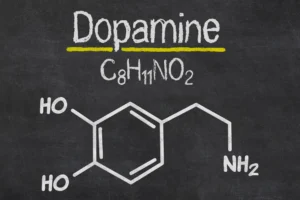
Cooler than endorphins. Cooler than adrenaline. WAY cooler than serotonin.
Allow me to make an analogy: a brain on a treasure hunt parallels a brain on a slot machine. And it’s all because of dopamine.
Anticipation is everything
Sorry, Tom Petty, the waiting isn’t the hardest part. It’s the best part. Or, oh, wait, is that what he actually meant? Anyway, in the 1990s, neuroscientist Wolfram Schultz did a famous experiment with monkeys and juice. A light flashes, juice arrives, dopamine fires. But after the monkeys learned the pattern, the dopamine spike moved. It stopped firing at the reward and started firing at the signal. The anticipation of juice beat the juice itself.
The expecting was better than the getting. Expecting and not getting? The absolute worst, see below.
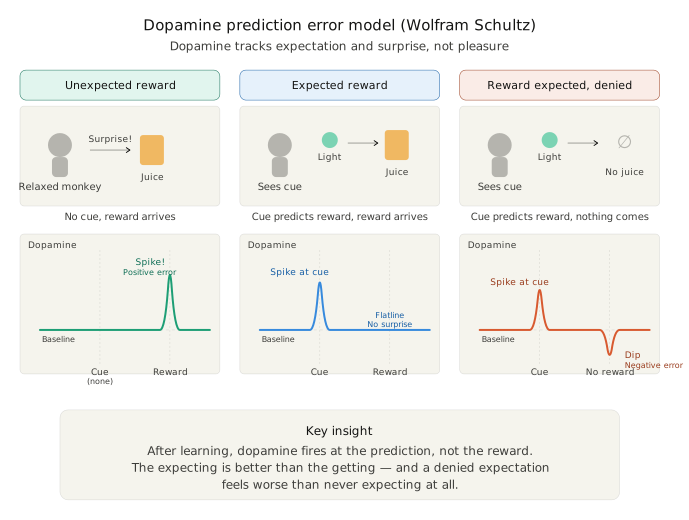
Monkey. Button. Juice. Dopamine.
Treasure hunts are “maybe” machines. You’re getting closer. Closer. It’s just around the corner… So close! The brain floods with dopamine — not because you found the treasure, but because you believe you’re about to. You’re not chasing gold. You’re chasing the feeling of almost having it.
Now add randomness
B.F. Skinner (famous guy, look him up!) put pigeons in boxes with levers that dispensed food. When the lever worked every time, the pigeons pressed it when hungry, then moved on. Reasonable. But when the lever worked on a random schedule — sometimes after three presses, sometimes after thirty — the pigeons went berserk. They couldn’t stop pressing. Skinner called this a “variable ratio reinforcement schedule.” Casinos call it a business model.

Dr. Skinner and his pigeons!
In THE GARBAGE MAN, my MC Kayla dreams of playing poker professionally. She’s brilliant at combining all the skills one needs to be a great player — reading cards, reading people, crunching probabilities. But poker is designed to exploit patterns. The patterns are real enough to keep a player hunting, and random enough to keep the player hooked. The brain says I almost had it, I just need one more hand. And that “one more” can last years. A treasure hunt tilts the human brain the same way. By design.
This is also why treasure hunts make such potent story engines. Plant a clue. Withhold the answer. Offer a partial revelation. Pull it away. Your brain physically cannot let go of an open loop. I know my brain can’t. Which is probably why I keep writing them.
So tell me: What’s your longest rabbit hole? The thing you chased way past the point of reason? Email me or drop it in the comments.