Unfinished Business
Growing up, my favorite movie for ever and ever was The Goonies. That film basically hard-wired my brain for treasure hunts. A ragtag crew of completely unqualified players (in this case, actual CHILDREN) chased a half-mythical prize while dodging traps, villains, and their own terrible decisions. Perfect story fuel. The Goonies hunted One-Eyed Willie’s pirate gold through collapsing tunnels, booby-trapped caverns and some timeless teen angst. I couldn’t get enough. But the story engine that fascinated me wasn’t the gold.
It was the chase.
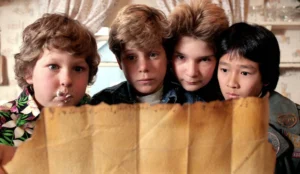
Old, crumbling treasure maps make me positively GIDDY
Treasure hunt stories typically follow the same pattern. The winners aren’t the strongest or the richest. They’re the especially motivated ones. The people with just enough talent, stubbornness, and personal obsession to keep going long after everyone else quits. That turns out to be true in real life too. Not always, but often enough that maybe it could happen to YOU. You know what I mean?
What makes treasure hunts so compelling? To the human brain, they appear as unfinished business, and our brains hate unfinished business. Well, actually, it’s more like the opposite – human brains like unfinished business. Specifically, they like to finish it. Humans are pattern-seeking machines. When we see an incomplete puzzle, our minds long to close the loop. Psychologists call this the Zeigarnik effect: unfinished tasks stick in your memory and demand resolution. And once you notice it, you see it everywhere. Take Sudoku. I don’t even like Sudoku. Not my thing. But every time I see one of those grids with a handful of numbers already filled in, I feel this ridiculous urge to solve it. I’ll stare at the page thinking This is beyond ridiculous while simultaneously trying to figure out where the 7 goes.
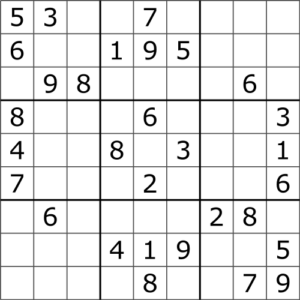
I’m literally getting itchy looking at this
That’s the Zeigarnik effect.
Media companies understand this perfectly. It’s why so many publications now include entire puzzle/game sections. The New York Times practically runs a puzzle empire: Wordle. Spelling Bee. Connections. Crosswords. Netflix has offered video games for while now, too. A puzzle hooks the brain in a way another news article or eight-part limited series simply doesn’t. You don’t just read or watch a puzzle. You engage with it. Which brings us to the modern version of One-Eyed Willie’s treasure.
The digital treasure hunt.
Like this, but ones and zeros 🙂
These show up in forms like ARGs (Alternate Reality Games) or cryptographic challenges such as Cicada 3301. Instead of pirate maps and skeleton keys, the clues are hidden in source code, encrypted files, obscure literature, GPS coordinates, and strange images posted online.
The most addictive hunts share the same ingredients:
• An unsolved mystery
• A difficult intellectual challenge
• A huge reward or prestige
• A global community working together
• A compelling narrative pulling players deeper
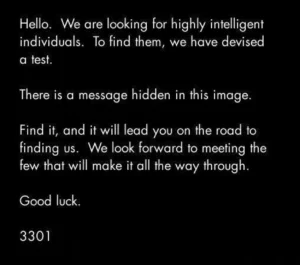
The first Cicada message from 2012, posted to a 4chan image board
When those elements combine, people go all in. Players spend months or even years chasing the solution. Entire online communities form around decoding a single clue. But if you look closer, you’ll notice something a little unsettling: if you can motivate thousands of smart people to obsess over a puzzle, you can also influence. Steer their behavior. Direct their attention. You can make them chase information, locations, or ideas without ever giving a direct instruction, which is exactly why puzzle-based recruitment has fascinated intelligence agencies, hackers, game designers, aspiring cult leaders, early-stage dictators, and anyone else who wants to map behavior to a reliable, chosen pattern. A well-designed mystery can mobilize people without them ever realizing they’re being mobilized.
And if that sounds like the setup for a thriller…
Well.
You’re thinking exactly what I’m thinking!
So tell me: What’s your favorite treasure hunt or puzzle? Email me or drop it in the comments.