Shame Is Dying. Act Now.
One of my favorite emotional drivers for characters is shame. Shame is efficient. Demanding. Unavoidable. It explains behavior that logic never could. The dictionary defines shame as “a painful feeling of humiliation caused by the awareness of wrongdoing.” Eh — word salad. I’d say it simpler: there’s good shame and bad shame. Good shame keeps you from doing something stupid twice. Maybe even keeps you from doing it the first time. It keeps you honest. Bad shame holds you back and mars your life like a knife slash to the face. It’s poisonous, ambient, amorphous. Both kinds create conflict — internal and external. They drive characters to lie, hide, lash out, self-destruct. In other words: writerly gold. I’ve mined these emotions in my stories, and for a long time, in my own life. I know shame well. I use it — uh — shamelessly.
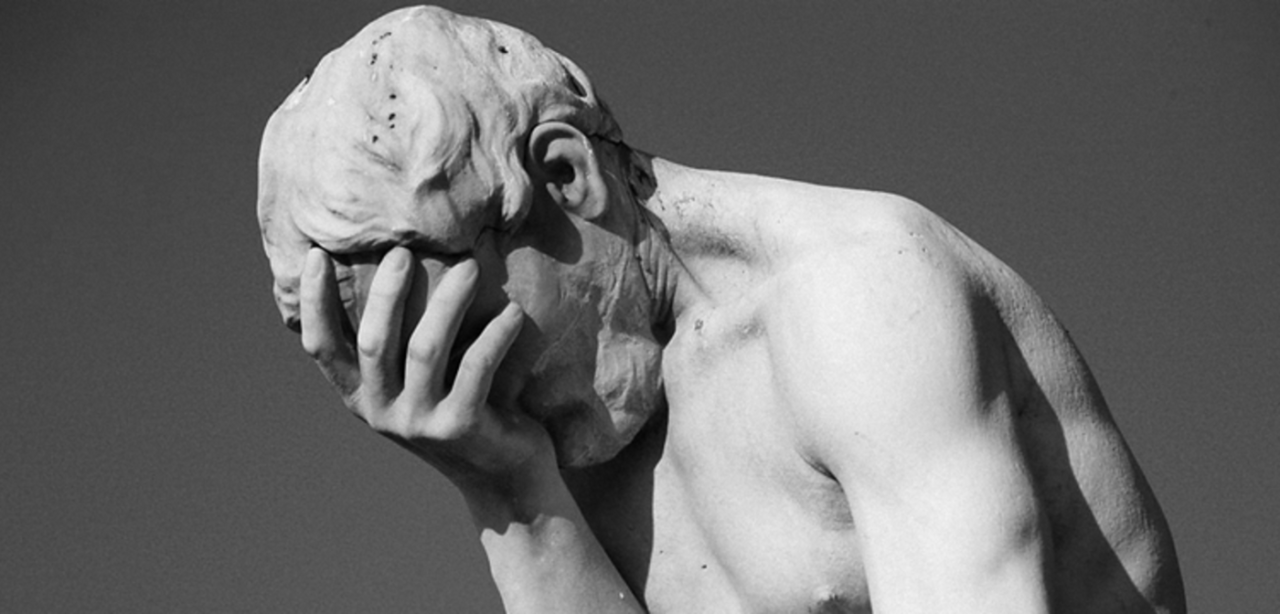
Cain (of Cain and Abel fame), statue by Henri Vidal, 1986 Source: Wikicommons
Which is why I’m increasingly alarmed by the possibility that shame is dying.
I first noticed it in reality television. This genre, which sits at the intersection of real people and coerced storylines, started this descent into the grotesque. Participants willingly sign up to behave horribly: to humiliate themselves, to treat others appallingly, to get into physical altercations, to trash restaurants, to commit actual crimes — and then recount it all on national television, often in front of their children. You simply cannot behave this way if you feel shame.

One of the Real Housewives of NJ, seconds before flipping an entire table. Source: Bravo
Politics came next. Entire careers now survive behavior that would once have been career-ending — cruelty, hypocrisy, incoherence, open corruption. Not necessarily because voters approve, but because shame no longer seems to land with them. Instead, there’s moral relativism and strategic justification. Voters talk about “trade-offs,” “holding their noses,” “choosing the least bad option.” I remember when this struck me as odd. It still does. How did we end up with so many public figures who appear to feel absolutely no shame? (And yes — I mean this fully bipartisan.)

This is an actual campaign ad! Source: Marjorie Taylor Green for Congress
Then there’s social media, where the elimination of shame isn’t a side effect. It’s the business model. Oversharing. Public meltdowns. Cruelty reframed as “authenticity.” Influencers treat shame as repression, as weakness, as something outdated and embarrassing. A concept you, the follower, would be wise to unlearn.
So it seems that somewhere along the line, shame was stabbed in the eye with a fork. And that’s a problem, because shame, when functioning properly, is a signal. It tells us we’ve crossed a line. It creates a shared moral grammar — a way of knowing right from wrong without having to negotiate it every time. It’s how children learn boundaries, and how adults are supposed to internalize and enforce them.
When shame disappears, that grammar collapses. Without shame, right and wrong stop being moral concepts and become strategic ones. The question shifts from Should I do this? to Can I get away with this? Will this play well? Will I be rewarded? Behavior isn’t guided by conscience anymore, but by incentives, attention, and applause. That’s why the death of shame feels so destabilizing. It doesn’t just produce worse behavior — it produces confusion. If nothing costs you internally, then nothing is truly forbidden. Everything can be explained away. Or excused.
As a writer, that terrifies me. Shame gives characters depth — the private war between who they are and who they want to be. Without it, humans don’t struggle or fracture or hide. They don’t grow. They perform. Loudly. Relentlessly. And often without consequence.
So here’s my proposal, as a writer. I think it’s time to start a movement. I even have a name:
Make Americans (feel) Shame Again.
I call it MASA.
And I’m thinking it would look great on a hat.